Simple Present Tense in English Grammar
Simple Present Tense in English Grammar
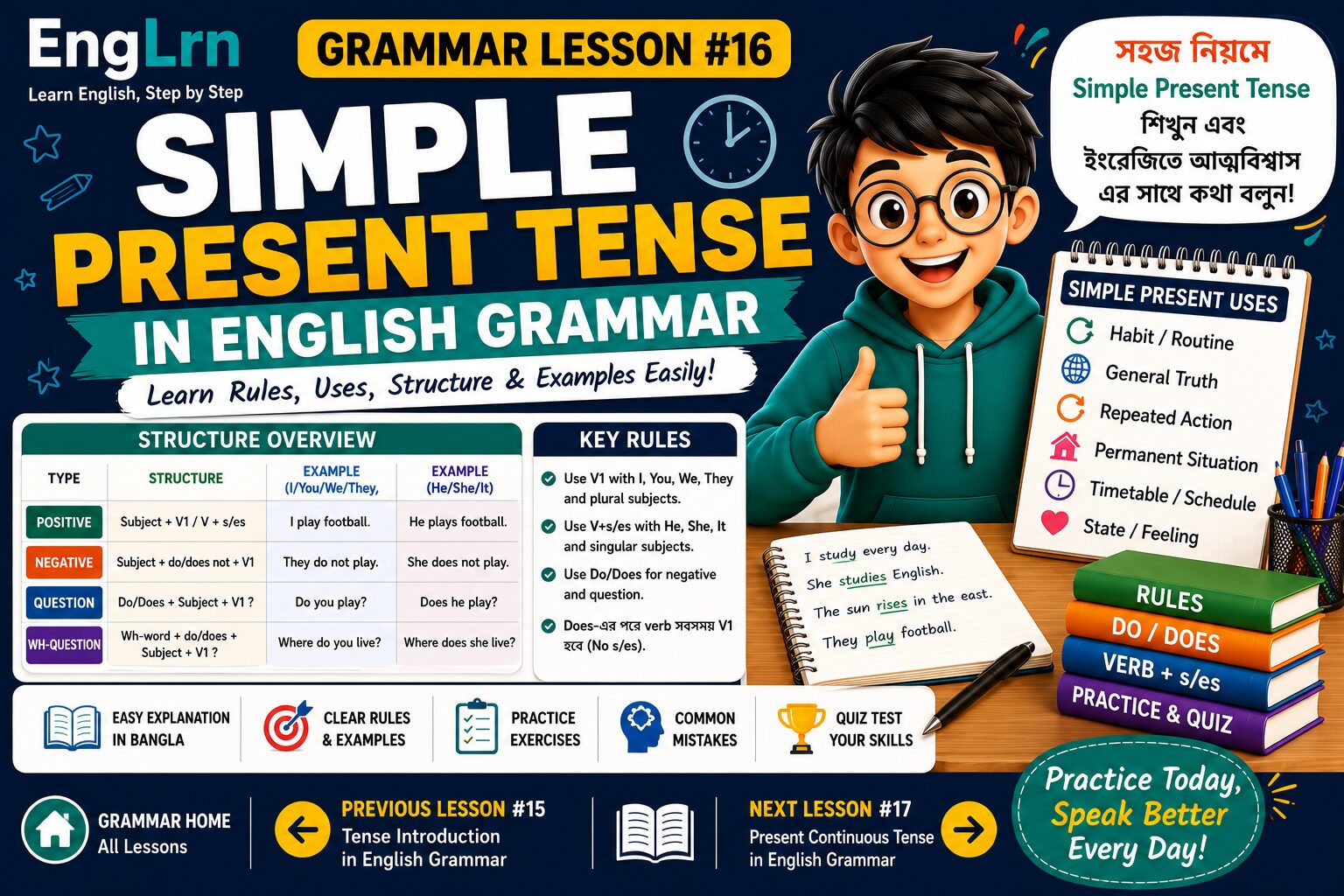
Simple Present Tense হলো English grammar-এর সবচেয়ে বেশি ব্যবহৃত tenseগুলোর একটি। Daily routine, habit, general truth, repeated action, permanent situation, instruction, timetable এবং feelings/state বোঝাতে simple present tense ব্যবহার করা হয়। Bengali learnersদের জন্য এই tense খুব important, কারণ everyday speaking, writing, conversation এবং basic sentence structure-এ এটি বারবার লাগে। এই lesson-এ আপনি simple present tense meaning, uses, structure, he/she/it + verb+s/es rule, do/does negative-question rules, spelling rules, common mistakes, practice এবং quiz সহজভাবে শিখবেন।
এই Lesson-এ যা শিখবেন
Grammar Series Navigation
এই lessonটি previous lesson, next lesson এবং main Grammar homepage-এর সাথে connected করা হলো।
Simple Present Tense কী?
Simple Present Tense is used to describe habits, routines, general truths, repeated actions, permanent situations, and present facts.
Previous Lesson-এর সাথে Connection
Lesson #15-এ আপনি Tense Introduction শিখেছেন। সেখানে আমরা 12 tense-এর overview দেখেছি। এখন tense series-এর প্রথম detailed lesson হলো Simple Present Tense, যা present time, habit, truth এবং routine বোঝাতে সবচেয়ে বেশি ব্যবহৃত হয়।
Simple Present Tense সাধারণত regular action বা always true information বোঝাতে ব্যবহৃত হয়। এই tense-এ main verb সাধারণত V1 form-এ থাকে। তবে subject যদি he, she, it বা singular noun হয়, তাহলে verb-এর শেষে s/es যোগ হয়।
She studies English every day.
The sun rises in the east.
They play football.
এখানে study, studies, rises, এবং play simple present tense-এর verb form.
Uses of Simple Present Tense
নিচের card-গুলোতে click করলে simple present tense-এর use সহজভাবে দেখাবে।
Habit / Routine
Every day, always, usually.
General Truth
Facts and universal truths.
Repeated Action
Often, sometimes, never.
Permanent Situation
Live, work, study.
Timetable
Fixed schedule.
State / Feeling
Know, like, love, have.
Simple Present Tense Structure
Positive, negative এবং question structure ভালোভাবে বুঝুন।
| Sentence Type | Structure | Example with I/You/We/They | Example with He/She/It |
|---|---|---|---|
| Positive | Subject + V1 / V+s/es + Object | I play football. | He plays football. |
| Negative | Subject + do/does + not + V1 + Object | They do not play football. | She does not play football. |
| Question | Do/Does + Subject + V1 + Object? | Do you play football? | Does he play football? |
| Wh-Question | Wh-word + do/does + Subject + V1? | Where do you live? | Where does she live? |
Very Important Rule
Does ব্যবহার করলে main verb-এ আর s/es থাকে না। Correct: She does not play. / Does he go? Wrong: She does not plays. / Does he goes?
Simple Present Tense Rules
Simple present tense ঠিকভাবে ব্যবহার করতে এই rulesগুলো অবশ্যই জানা দরকার।
Basic Rule
I, you, we, they এবং plural subject-এর সাথে base verb/V1 ব্যবহার হয়। He, she, it এবং singular subject-এর সাথে verb+s/es ব্যবহার হয়।
He works. / She works. ✅
He / She / It + Verb+s/es
Simple present positive sentence-এ he, she, it বা singular noun থাকলে verb-এর শেষে s/es যোগ হয়।
She reads books.
Rahim goes to school.
The cat drinks milk.
Do / Does Rule
Negative এবং question sentence-এ do/does ব্যবহার হয়। Does ব্যবহারের পরে main verb সবসময় V1 হবে।
She does not like coffee.
Do you speak English?
Does he speak English?
Simple Present with Be Verb
Simple present tense-এ am, is, are ব্যবহার করে identity, condition, quality বা location বোঝানো যায়।
She is happy.
They are ready.
We are from Bangladesh.
Common Signal Words
Simple present tense-এ often habit/routine signal words থাকে। তবে context সবসময় important.
Verb+s/es Spelling Rules
He/she/it-এর সাথে verb+s/es যোগ করার সময় spelling change হতে পারে।
go → goes
watch → watches
study → studies
have → has
Simple Present Verb Forms
He/she/it-এর সাথে verb কীভাবে পরিবর্তন হয় তা দেখুন।
| Base Verb | He/She/It Form | Rule | Example Sentence |
|---|---|---|---|
| play | plays | Add s | He plays football. |
| read | reads | Add s | She reads books. |
| go | goes | Add es | Rahim goes to school. |
| watch | watches | Add es after ch | He watches TV. |
| study | studies | y → ies | She studies English. |
| have | has | Irregular | He has a book. |
| do | does | Irregular | She does her homework. |
Bengali Learnersদের Common Simple Present Mistakes
Simple present tense ছোট মনে হলেও এখানে learnersরা অনেক ভুল করে।
He go to school. ❌
He goes to school. ✅
He/she/it বা singular subject-এর সাথে verb+s/es লাগে।
She does not likes tea. ❌
She does not like tea. ✅
Does not-এর পরে main verb V1 হবে।
Does he goes to school? ❌
Does he go to school? ✅
Question-এ does থাকলে main verb V1 হবে।
I lives in Dhaka. ❌
I live in Dhaka. ✅
I-এর সাথে base verb ব্যবহার হয়।
They plays football. ❌
They play football. ✅
They plural subject, তাই base verb হবে।
She have a car. ❌
She has a car. ✅
He/she/it-এর সাথে have → has হয়।
Simple Present Tense Practice
নিচের exercises করে simple present tense practice করুন।
A. Choose the Correct Verb
B. Make Negative and Question
C. Quick Quiz
This Lesson Belongs to These Grammar Topics
Main Grammar homepage-এর card/topic structure-এর সাথে এই lesson connect করা হলো।
Tense
এই lesson tense category-এর detailed lesson.
Simple Present
Habit, routine, fact এবং truth বোঝাতে ব্যবহৃত হয়।
Subject-Verb Agreement
He/she/it + verb+s/es rule এখানে খুব important.
Speaking Practice
Daily routine এবং personal habits বলতে simple present দরকার।
EngLrn Grammar Lesson Sequence
এই lessonটি Grammar Series-এর ষোড়শ lesson হিসেবে tracked করা হলো।
Lesson Complete?
এই lesson complete হলে Grammar Lesson #17: Present Continuous Tense in English Grammar পড়ুন।
Simple Present Tense নিয়ে সাধারণ প্রশ্ন
Beginner learnersদের common questions-এর সহজ উত্তর।
Simple Present Tense কী?
Simple Present Tense এমন একটি tense যা habit, routine, general truth, repeated action, permanent situation এবং present fact বোঝাতে ব্যবহৃত হয়।
He, she, it-এর সাথে verb+s/es কেন হয়?
Simple present positive sentence-এ he, she, it এবং singular subject-এর সাথে verb+s/es ব্যবহার হয়। Example: He plays, She reads, It works.
Do এবং does কখন ব্যবহার হয়?
I, you, we, they এবং plural subject-এর সাথে do ব্যবহার হয়। He, she, it এবং singular subject-এর সাথে does ব্যবহার হয়।
Does-এর পরে verb+s/es হবে?
না। Does-এর পরে main verb সবসময় V1/base form হবে। Correct: Does he go? / She does not like tea.
এই lesson-এর পর কোন lesson পড়ব?
এই lesson-এর পর Present Continuous Tense in English Grammar পড়া উচিত, কারণ সেখানে এখন চলমান action বোঝানো হয়।
Simple Present Tense in English Grammar for Bengali Learners
এই lesson-এ Bengali learnersদের জন্য Simple Present Tense in English Grammar সহজভাবে ব্যাখ্যা করা হয়েছে। Simple present tense habit, routine, general truth, repeated action, permanent situation, schedule এবং present fact বোঝাতে ব্যবহৃত হয়।
He/she/it + verb+s/es rule, do/does negative and question structure, spelling rules, common simple present mistakes এবং practice exercises শেখার মাধ্যমে learners English speaking, writing এবং grammar accuracy improve করতে পারবে।