Modal Verbs in English Grammar
Modal Verbs in English Grammar
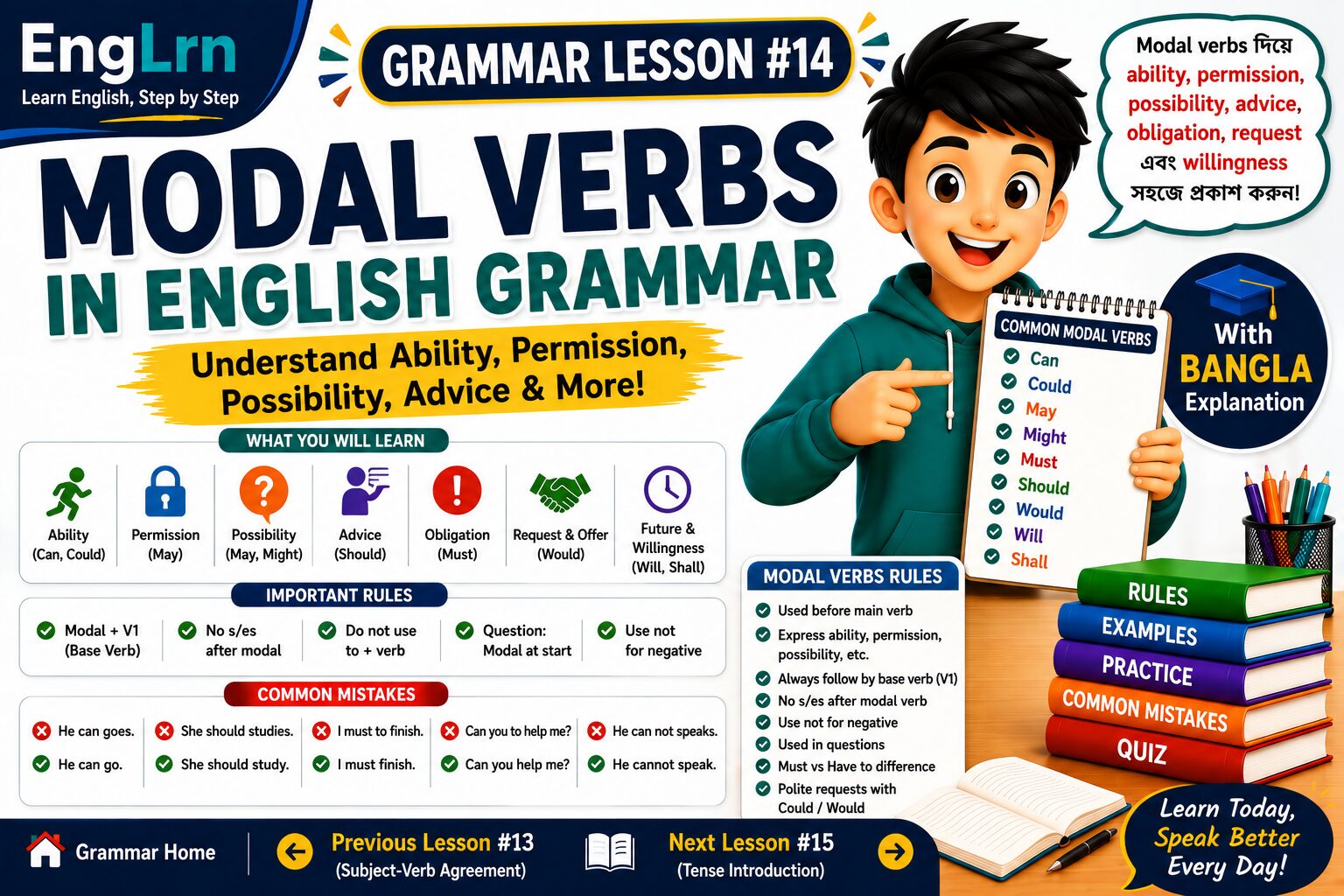
Modal Verbs হলো English grammar-এর বিশেষ helping verbs, যেগুলো main verb-এর আগে বসে ability, permission, possibility, advice, obligation, request, offer, willingness বা certainty বোঝায়। Can, could, may, might, must, should, would, will, shall—এসব modal verb English speaking এবং writing-এ খুব বেশি ব্যবহৃত হয়। Bengali learnersদের জন্য modal verbs শেখা খুব গুরুত্বপূর্ণ, কারণ এগুলোর মাধ্যমে polite request, suggestion, rule, possibility এবং confidence সহজভাবে প্রকাশ করা যায়। এই lesson-এ modal verbs meaning, rules, uses, examples, common mistakes, practice এবং quiz শিখবেন।
এই Lesson-এ যা শিখবেন
Grammar Series Navigation
এই lessonটি previous lesson, next lesson এবং main Grammar homepage-এর সাথে connected করা হলো।
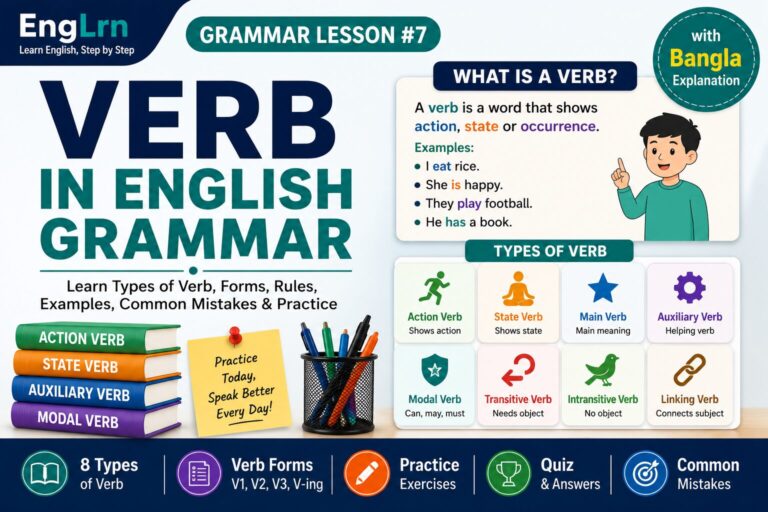
Modal Verb কী?
A modal verb is a helping verb used before the main verb to express ability, permission, possibility, advice, necessity, request, or willingness.
Previous Lesson-এর সাথে Connection
Lesson #13-এ আপনি Subject-Verb Agreement শিখেছেন। Modal verbs শেখার সময় একটি গুরুত্বপূর্ণ সুবিধা হলো: modal verb-এর পরে সবসময় main verb-এর base form বা V1 বসে। তাই “He can goes” নয়, “He can go” হবে।
Modal verbs main verb-এর meaning শক্তিশালী করে। শুধু “I go” বললে সাধারণ action বোঝায়। কিন্তু “I can go”, “I should go”, “I must go”, “I may go”—প্রতিটি sentence-এ meaning আলাদা হয়।
You should study daily.
She may come tomorrow.
We must follow the rules.
এখানে can, should, may, এবং must — এগুলো modal verbs.
Common Modal Verbs and Uses
নিচের card-গুলোতে click করলে প্রতিটি modal verb-এর সহজ explanation দেখাবে।
Can
Ability / permission.
Could
Past ability / polite request.
May
Permission / possibility.
Might
Weak possibility.
Must
Strong necessity.
Should
Advice / suggestion.
Would
Polite request / wish.
Will
Future / promise.
Modal Verbs Table with Meaning and Examples
এই table দেখে modal verbs দ্রুত revise করুন।
| Modal Verb | Main Use | Example Sentence | Bangla Meaning |
|---|---|---|---|
| Can | Ability / permission | I can speak English. | পারি / অনুমতি |
| Could | Past ability / polite request | Could you help me? | পারতাম / অনুগ্রহ করে |
| May | Permission / possibility | May I come in? | পারি কি / হতে পারে |
| Might | Weak possibility | It might rain. | হতে পারে |
| Must | Strong obligation | You must follow the rules. | অবশ্যই করতে হবে |
| Should | Advice / suggestion | You should study daily. | করা উচিত |
| Would | Polite request / wish | I would like some tea. | করতে চাই / বিনীতভাবে |
| Will | Future / promise | I will call you tomorrow. | করব |
Modal Verb Rules You Must Know
Modal verbs ব্যবহার করার সময় কিছু basic rule সবসময় মনে রাখতে হবে।
Modal Verb + Base Verb / V1
Modal verb-এর পরে সবসময় main verb-এর base form বা V1 বসে।
He should study. ✅
They must work. ✅
Modal-এর পরে verb+s/es হয় না
He/she/it থাকলেও modal verb-এর পরে main verb-এ s/es যোগ হয় না।
He can goes. ❌
She should reads. ❌
She should read. ✅
Negative Modal Structure
Modal verb-এর negative করতে modal-এর পরে not বসে।
should not / shouldn’t
must not / mustn’t
You should not waste time.
Question Structure
Question করতে modal verb sentence-এর শুরুতে বসে।
Should I call him?
May I come in?
Would you like some tea?
Must vs Have to
Must strong personal obligation বা strong rule বোঝায়। Have to external rule, duty বা necessity বোঝাতে ব্যবহৃত হয়।
I have to attend the meeting.
Students have to follow the exam rules.
Polite Request
Could, would, may ব্যবহার করলে request বেশি polite হয়।
Could you help me? = more polite
Would you please explain it? = polite
May I ask a question? = formal
Common Modal Verb Structures
Speaking এবং writing-এ এই structures বারবার ব্যবহার হয়।
| Structure | Use | Example | Meaning |
|---|---|---|---|
| Can + V1 | Ability | I can drive. | আমি গাড়ি চালাতে পারি। |
| Could + V1 | Polite request | Could you repeat that? | আপনি কি আবার বলবেন? |
| May + V1 | Formal permission | May I enter? | আমি কি ঢুকতে পারি? |
| Might + V1 | Possibility | He might come. | সে আসতে পারে। |
| Must + V1 | Strong obligation | You must be careful. | তোমাকে অবশ্যই সাবধান হতে হবে। |
| Should + V1 | Advice | You should practice. | তোমার practice করা উচিত। |
| Would like to + V1 | Polite desire | I would like to learn English. | আমি English শিখতে চাই। |
| Will + V1 | Future / promise | I will help you. | আমি তোমাকে সাহায্য করব। |
Bengali Learnersদের Common Modal Verb Mistakes
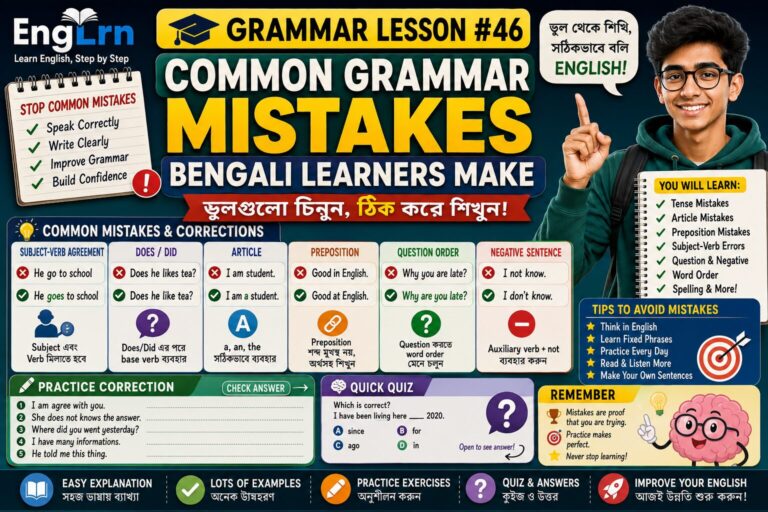
Modal verb-এর পরে V1 না দিলে sentence ভুল হয়ে যায়।
He can goes to school. ❌
He can go to school. ✅
Modal verb-এর পরে main verb-এর base form/V1 বসে।
She should studies daily. ❌
She should study daily. ✅
Should-এর পরে verb+s/es হয় না।
Can you to help me? ❌
Can you help me? ✅
Modal verb-এর পরে directly V1 বসে; to লাগে না।
I must to finish this. ❌
I must finish this. ✅
Must-এর পরে to + verb নয়, শুধু V1 হবে।
He can not speaks English. ❌
He cannot speak English. ✅
Negative হলেও modal-এর পরে V1 থাকবে।
May you help me? ❌ / Usually unnatural
Could you help me? ✅
Request করার জন্য could/would বেশি natural.
Modal Verbs Practice
নিচের exercises করে modal verbs practice করুন।
A. Choose the Correct Verb Form
B. Choose the Best Modal Verb
C. Quick Quiz
This Lesson Belongs to These Grammar Topics
Main Grammar homepage-এর card/topic structure-এর সাথে এই lesson connect করা হলো।
Modal Verbs
এই lesson-এর main category হলো Modal Verbs.
Helping Verbs
Modal verbs main verb-কে meaning দিতে সাহায্য করে।
Speaking Patterns
Request, advice, permission এবং possibility প্রকাশ করতে modal verbs খুব useful.
Common Mistakes
Can goes, should studies, must to go—এই mistakes correction.
EngLrn Grammar Lesson Sequence
এই lessonটি Grammar Series-এর চতুর্দশ lesson হিসেবে tracked করা হলো।
Lesson Complete?
এই lesson complete হলে Grammar Lesson #15: Tense Introduction in English Grammar পড়ুন।
Modal Verbs নিয়ে সাধারণ প্রশ্ন
Beginner learnersদের common questions-এর সহজ উত্তর।
Modal Verb কী?
Modal Verb হলো helping verb যা main verb-এর আগে বসে ability, permission, possibility, advice, request বা obligation বোঝায়। যেমন can, could, may, might, must, should, would, will.
Modal verb-এর পরে কোন verb form বসে?
Modal verb-এর পরে সবসময় base verb বা V1 বসে। Example: can go, should study, must work.
Can এবং could-এর পার্থক্য কী?
Can ability বা normal request বোঝায়। Could past ability বা polite request বোঝাতে বেশি ব্যবহৃত হয়।
Should এবং must-এর পার্থক্য কী?
Should advice বা suggestion বোঝায়। Must strong obligation বা strong necessity বোঝায়।
এই lesson-এর পর কোন lesson পড়ব?
এই lesson-এর পর Tense Introduction in English Grammar পড়া উচিত, কারণ tense শেখার জন্য verb form, auxiliary verb এবং modal verb সম্পর্কে basic ধারণা থাকা দরকার।
Modal Verbs in English Grammar for Bengali Learners
এই lesson-এ Bengali learnersদের জন্য Modal Verbs in English Grammar সহজভাবে ব্যাখ্যা করা হয়েছে। Modal verbs main verb-এর আগে বসে ability, permission, possibility, advice, obligation, request এবং willingness বোঝাতে সাহায্য করে।
Can, could, may, might, must, should, would, will এবং shall-এর ব্যবহার শেখার মাধ্যমে learners English speaking, writing, polite conversation এবং sentence structure আরও natural করতে পারবে।